


Managing Linux Devices on the Factory Floor: A Modern IT Approach
mrt 18, 2026 | Upasna Kesarwani
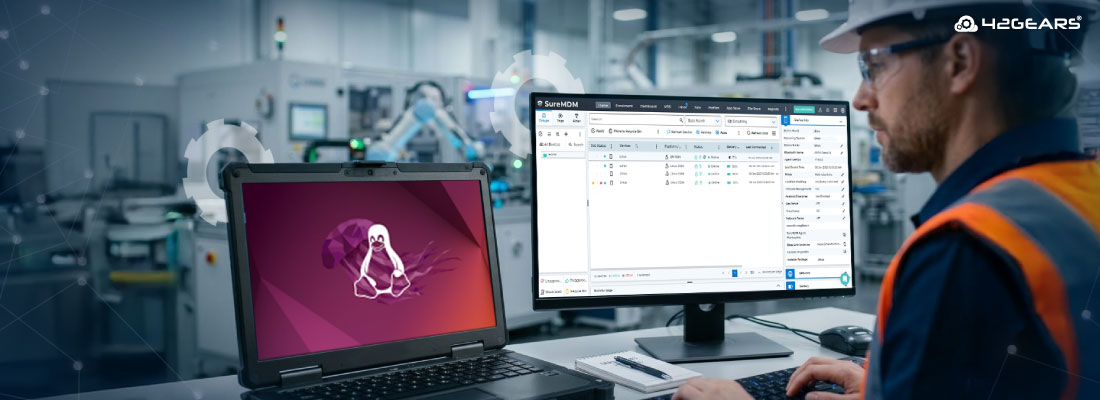
Manufacturing environments are becoming increasingly digital. From industrial gateways and rugged tablets to embedded systems running production lines, Linux-powered devices are now a critical part of factory floor operations.
These devices support automation, data collection, quality monitoring, and real-time analytics. However, as deployments grow across multiple plants and locations, managing Linux devices at scale becomes a significant challenge for IT teams.
Traditional approaches such as manual configuration or SSH-based scripts are no longer sufficient for modern manufacturing environments. Organizations need a centralized, secure, and scalable approach to managing Linux endpoints across the factory floor.
In this blog, we explore how enterprises can modernize Linux device management to improve uptime, security, and operational efficiency.
Why Linux Devices Are Common on the Factory Floor
Linux has become the preferred operating system for many industrial environments due to its flexibility, stability, and ability to run on lightweight hardware.
Common Linux-powered factory devices include:
- Industrial gateways connecting production machines to cloud platforms
- Embedded systems controlling assembly lines and robotics
- Operator panels and HMIs used for monitoring and machine control
- Rugged tablets and handheld devices are used by technicians and floor managers
- IoT sensors and edge devices are collecting operational data
These devices are often distributed across large production facilities or multiple factory locations, making centralized management essential.
Challenges of Managing Linux Devices in Manufacturing
While Linux devices offer reliability, managing them across a production environment can be complex.
1. Limited On-Site IT Access
Factories may run 24/7 operations, often in remote or restricted areas where IT teams cannot physically access devices easily.
Without remote management capabilities, even small configuration changes can require manual intervention, leading to delays and increased downtime.
2. Security and Patch Management Risks
Industrial environments increasingly face cybersecurity threats. Unpatched Linux devices can become entry points for network attacks.
Ensuring consistent OS updates and patch management across hundreds or thousands of devices is a major challenge when done manually.
3. Device Configuration Drift
Over time, factory devices may run different configurations due to manual updates or local changes. This creates inconsistent environments, which can impact production systems and troubleshooting.
4. Downtime from Device Failures
When devices controlling production lines fail or malfunction, the impact can be immediate—production delays, operational disruptions, and revenue loss.
IT teams need tools that enable rapid diagnostics and remote troubleshooting.
What a Modern Linux Device Management Strategy Looks Like
To support Industry 4.0 initiatives and connected manufacturing environments, organizations are adopting centralized Linux device management platforms.
A modern approach focuses on several key capabilities.
Centralized Device Visibility
IT teams need a single dashboard to monitor all Linux devices across factories.
This includes visibility into:
- Device health and uptime
- OS versions
- Network connectivity
- Hardware performance metrics
Centralized monitoring helps teams detect issues early and maintain continuous production operations.
Remote Configuration and Policy Enforcement
Instead of manually configuring each device, IT administrators should be able to:
- Push configurations remotely
- Enforce security policies
- Control device settings at scale
This ensures consistent configurations across all factory devices, reducing errors and simplifying IT operations.
Automated Patch and Update Management
Keeping Linux devices updated is critical for both security and system stability.
Modern management solutions allow administrators to:
- Schedule OS and security patch updates
- Deploy updates remotely across device fleets
- Monitor update status and compliance
Automated patch management significantly reduces the risk of vulnerabilities in production environments.
Remote Troubleshooting and Support
When devices encounter issues, IT teams need tools to diagnose problems quickly without stopping production.
Capabilities such as:
- Remote terminal access
- Log monitoring
- Remote device reboot or recovery
allow administrators to resolve problems without physically visiting the factory floor.
Kiosk and Application Control
Many Linux devices in manufacturing are designed for single-purpose workflows, such as running machine monitoring software or production dashboards.
Kiosk capabilities allow IT teams to:
- Lock devices into specific applications
- Prevent unauthorized usage
- Maintain operational consistency across devices
This ensures that factory devices remain secure and focused on production tasks.
Supporting Scalable Manufacturing Operations
As manufacturers adopt smart factory initiatives, the number of connected devices on the production floor will continue to grow.
A centralized Linux management strategy helps organizations:
- Reduce operational downtime
- Strengthen device security
- Simplify large-scale deployments
- Improve IT efficiency across facilities
Solutions like SureMDM enable enterprises to manage Linux endpoints—including embedded systems and edge devices—from a single console, helping IT teams maintain control even in complex industrial environments.
Final Thoughts
Linux devices are becoming the backbone of modern manufacturing infrastructure. However, managing them using traditional tools and manual processes can create operational risks.
By adopting a modern Linux device management approach, organizations can gain centralized control, improve security, and ensure that critical factory systems run smoothly without interruption.
As industrial environments continue to scale, efficient Linux device management will play a key role in enabling reliable and secure smart factory operations.
FAQs
Why are Linux devices commonly used on the factory floor?
Linux devices are widely used in manufacturing because they are stable, customizable, and capable of running on lightweight industrial hardware. They power systems such as industrial gateways, embedded controllers, operator panels, and IoT sensors. Linux also supports long uptime and flexible integrations, making it ideal for factory automation and edge computing environments.
What challenges do IT teams face when managing Linux devices in manufacturing environments?
Managing Linux devices across factory floors can be difficult due to device distribution, limited physical access, and the need for continuous uptime. IT teams often struggle with maintaining consistent configurations, applying security patches across multiple devices, and troubleshooting issues remotely without interrupting production operations.
How can enterprises manage Linux devices across multiple factory locations efficiently?
Enterprises can manage Linux devices more efficiently by adopting a centralized Linux device management solution. This allows IT teams to remotely monitor device health, push configurations, deploy patches, and troubleshoot issues from a single console. Platforms like SureMDM help organizations maintain security, ensure consistency, and manage large fleets of Linux devices across distributed manufacturing facilities.
Managing Linux devices across multiple
factories doesn’t have to be complex.
Subscribe for our free newsletter

Exclusive News and Updates on Enterprise Mobility!
