How IoT has changed retail industry in 2025
Dic 10, 2025 | Upasna Kesarwani
Last Updated: Dic 16, 2025
The retail industry is evolving rapidly, driven by changing consumer expectations, omnichannel shopping, and the need for real-time operational efficiency. Among all emerging technologies, the Internet of Things (IoT) has become a key enabler of this transformation.
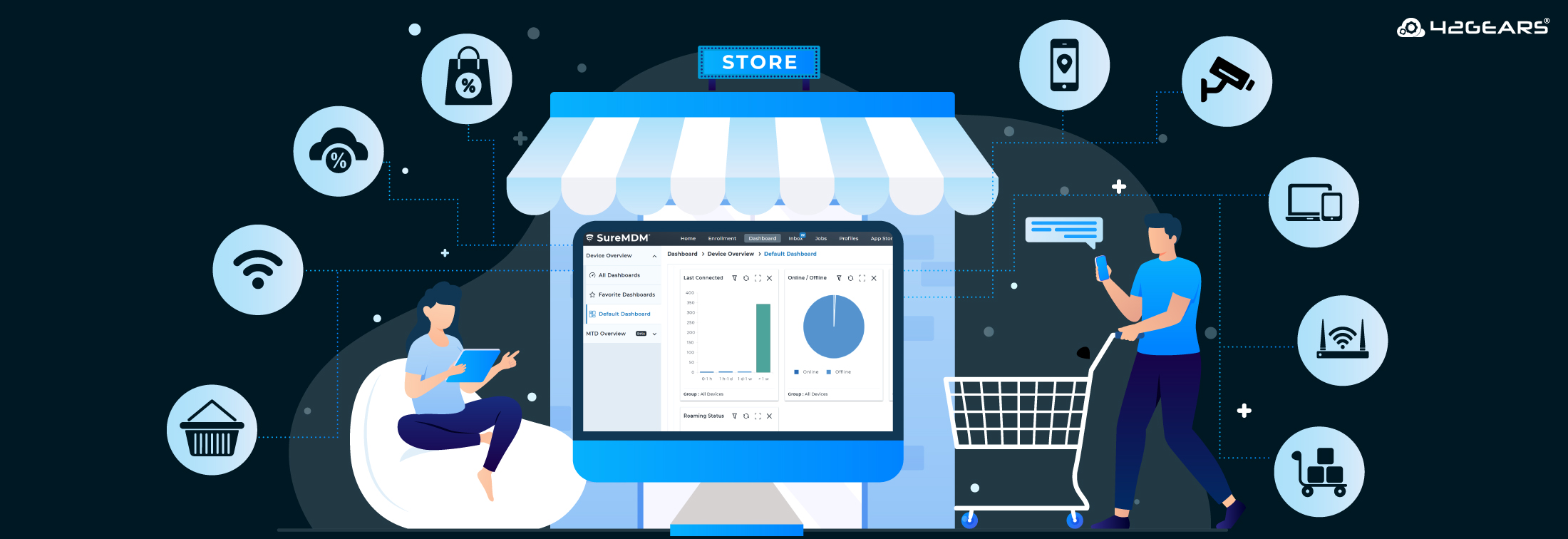
In 2025, IoT helped retailers automate processes, reduce manual work, improve in-store experiences, and gain real-time visibility across operations. When combined with a Unified Endpoint Management (UEM) solution like 42Gears SureMDM, IoT turns into a powerful tool for building smarter, more secure, and more efficient retail environments.
1. Smart Shelves and Real-Time Inventory Management
Out-of-stock situations cost retailers billions globally each year. IoT-enabled smart shelves, RFID tags, BLE sensors, and weight-based sensors now make it possible to:
- Track inventory levels in real time
- Get automated alerts when stock is low
- Prevent shrinkage and theft
- Optimize replenishment cycles
- Sync with POS and backend supply chain systems instantly
With these capabilities, store staff spend less time manually checking stock and more time assisting customers.
UEM advantage:
All smart shelf sensors, handheld RFID scanners, and in-store mobile devices can be remotely monitored, updated, and secured via SureMDM.
2. IoT for Personalized Customer Experiences
Modern customers expect tailored experiences at every touchpoint. IoT enables hyper-personalization through:
- Smart beacons that push contextual offers to shoppers' smartphones
- Smart mirrors in fashion stores showing virtual try-ons
- Connected fitting rooms that help associate staff deliver the right product sizes or accessories
- Customer movement analytics based on in-store sensors
- AI-driven product recommendations based on browsing/interaction patterns
These experiences not only improve customer satisfaction but also significantly increase sales conversions.
3. Enhanced Supply Chain Visibility
IoT helps retailers create an efficient, transparent supply chain by offering:
- Real-time tracking of goods across warehouses, transportation, and stores
- Telemetry data on temperature, humidity, or shock—especially for perishable or sensitive goods
- Predictive analytics for route optimization and delivery planning
- Automated check-in/check-out systems at warehouses
End-to-end visibility not only reduces operational costs but also improves delivery accuracy.
4. Smart Checkout and Frictionless Payments
The rise of autonomous retail formats—powered heavily by IoT—has completely changed checkout experiences:
- Self-checkout kiosks
- Computer-vision-based checkout-free stores (walk-in walk-out models)
- Mobile-POS devices
- Sensor-enabled shopping carts
IoT devices track what customers pick, calculate totals automatically, and enable instant payments without standing in queues.
UEM advantage:
SureMDM ensures kiosks, mobile POS devices, barcode scanners, and tablets remain secure, updated, and functioning 24/7.
5. IoT-Driven Workforce Efficiency
In-store associates and managers rely heavily on connected devices such as:
- Rugged handhelds
- Wearables
- Headsets
- Smart badges
- Tablets and kiosks
IoT enables better communication, automated task assignment, and real-time coordination between departments.
Examples include:
- Smart tags that alert staff when a customer needs help
- Wearables used for picking/packing in omnichannel fulfillment at stores
- AI-driven workload forecasting based on footfall and historical data
6. Predictive Maintenance for Retail Equipment
Downtime in retail can directly impact sales. IoT enables predictive maintenance of:
- POS terminals
- Digital signages
- Refrigeration and cold-chain assets
- Vending machines
- HVAC systems
- Security gates and surveillance cameras
Sensors collect usage and operational data that help predict failures before they happen—keeping stores running smoothly.
7. Strengthening Store Security with IoT
Retail security systems today are interconnected through IoT:
- IP cameras
- Smart alarms
- Access control sensors
- Digital lock systems
- Anti-theft RFID gates
AI-enabled analytics add extra layers of protection by detecting unusual movement, loitering patterns, or possible theft attempts in real time.
8. IoT + UEM = The Future of Smart Retail
For most retailers, the biggest challenge isn't deploying IoT devices—it is managing and securing them at scale.
This is where a UEM platform like 42Gears SureMDM becomes crucial:
- Manage all IoT, mobile, and frontline devices from a single console
- Apply security policies across heterogeneous devices
- Monitor device health, battery, connectivity, and uptime
- Push updates and patches remotely
- Get real-time alerts and analytics
- Lock down devices to prevent misuse
- Ensure compliance with data-privacy regulations
As IoT ecosystems continue to expand in 2025, robust management becomes mandatory for security, uptime, and operational stability.
Conclusion
IoT continues to reshape the retail landscape by making stores smarter, more efficient, and more customer-centric. From real-time inventory management to automated checkout and predictive maintenance, connected technologies are driving the next phase of retail innovation.Retailers who invest in IoT—supported by a strong UEM solution like 42Gears SureMDM—gain better control over operations, reduce costs, and deliver superior experiences that keep customers coming back.
Transform Your Retail Store with Smart IoT + UEM
Subscribe for our free newsletter

Exclusive News and Updates on Enterprise Mobility!