


Unkategorisiert
Extending MDM to AI Infrastructure: Managing NVIDIA DGX Spark with MDM

Device management has come a long way. What started as a way to manage smartphones has steadily evolved into a comprehensive approach for managing a wide range of enterprise endpoints. Mobile Device Management (MDM) solutions were initially designed to manage mobile devices—but as enterprise needs grew, they expanded to support desktops, laptops, and IoT devices. …
WeiterlesenUnified Printer and Device Management: Manage TSC Auto ID Printers with 42Gears’ SureMDM

Streamlined operations, reduced downtime, and centralized printer control—now extended to TSC Auto ID printers. We’re thrilled to announce a new integration that simplifies printer management like never before—SureMDM now supports TSC Auto ID printers through our robust Things Management Technology. Whether you’re overseeing mobile devices or industrial peripherals, this integration empowers you to manage your…
WeiterlesenUnderstanding SCAP: A Standardized Approach to Security Assessment

As organizations manage increasingly large and diverse device environments, security can no longer rely on ad-hoc checks or individually configured security settings. Regulated industries require consistent, repeatable, and measurable security practices; this is where standards like the Security Content Automation Protocol (SCAP) come into play. Developed and maintained by the National Institute of Standards and…
WeiterlesenHow to Find a Lost Phone: Complete Guide to Track Any Device (Android & iPhone)

You check your pocket—and your phone is gone. Panic sets in. Did you leave it somewhere, or was it stolen? Losing your phone can be stressful—not just because of the cost, but because it holds your personal data, photos, and access to important accounts. Whether you’re searching for how to find a lost phone, how…
WeiterlesenSecure Testing for Healthcare Apps

Twenty years ago, healthcare lived inside hospital walls. Appointments meant waiting rooms, paperwork, and physical visits. Today, it lives in our pockets, on our wrists, and inside apps that quietly monitor every step and heartbeat. Consultations happen over video calls. Prescriptions appear inside mobile dashboards. Wearables stream heart rates, sleep cycles, and blood glucose levels…
WeiterlesenQuick Remote Factory Reset for Android Devices Using HID Automation

Managing large fleets of Android devices shouldn’t require physical access every time a device needs to be reset. Yet for many OEM vendors and MDM users, factory resets still mean manual intervention — tapping through setup screens, reconfiguring settings, and re-enrolling devices one by one. With the latest update to AstroFarm, that changes. We’re introducing…
WeiterlesenThe Modern Guide to Linux Fleet Automation: How to Scale, Secure, and Standardize Your Infrastructure
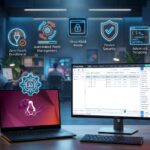
In the early days of enterprise IT, Linux was the „specialist“ operating system. It lived in the server room, managed by a handful of experts who knew every shell command by heart. But the landscape has shifted. Today, Linux is everywhere. It’s the engine behind your self-service kiosks, the brain inside your industrial IoT sensors,…
WeiterlesenFrom Risk to Resilience: Mobile Device Management for BFSI

The modern BFSI workplace doesn’t pause for security checks. A tablet speeds up customer onboarding at a busy branch. A field officer accesses policy data on a personal phone. A kiosk processes transactions all day without supervision. When a device goes missing, connects to an unsafe network, or needs access revoked instantly, the risk is…
WeiterlesenBe Sure of Your Assets with SureAsset

The Curious Case of One Missing Laptop… Imagine an employee leaves your organization. As part of the usual process, they return their work assets (laptop and accessories). But when the IT team tries to verify them later, there’s no clear record of where the assets actually are. On one hand, the procurement team assumes they…
WeiterlesenMDM Security Explained: Preventing Credential Misuse with Zero Trust

Cybersecurity incidents keep happening across industries, but they often reveal gaps in how systems are managed—not flaws in the systems themselves. Sometimes, privileged credentials can be misused to perform critical actions, like remotely wiping devices, showing just how important it is to have strong controls around administrative access. It’s worth noting that these situations don’t…
Weiterlesen